
Kitting turns separate products into one ready-to-ship unit, like a gift set or subscription box. Here’s how it differs from bundling, when pre-kitting saves money, which Canadian labelling rules apply to a new kit, and what to ask a 3PL before it builds yours.
A customer orders your candle gift set for her sister’s birthday. It arrives on time and looks like the photos, except the brass wick trimmer from every product shot isn’t in the box. She doesn’t email you about it; she leaves two stars and buys her next gift somewhere else.
Nobody at your company packed that box, and nobody saw it leave. The trimmer went missing at the kitting stage, where a warehouse team turns three separate products into one gift set, and one skipped step there reaches your customer before it reaches you. Most of the fixes sit upstream of the packing bench, in the paperwork and the barcodes.
This guide covers what kitting is and how it differs from bundling, when pre-kitting saves money, the Canadian labelling rules a new kit trigger, what kitting and assembly services include, and what to ask a 3PL before it builds your kits.
What Kitting Means in a Warehouse
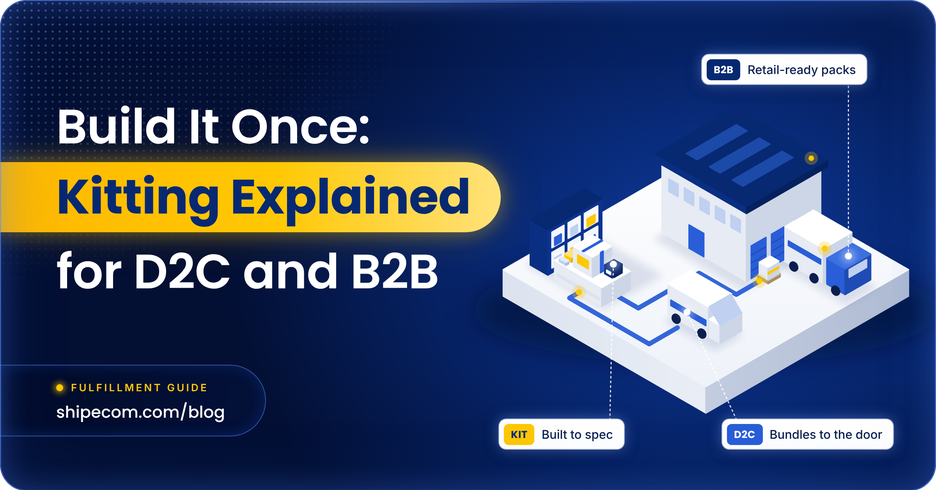
Kitting groups separate items, following a bill of materials (BOM), into a new finished unit with its own SKU. Gift sets, subscription boxes and starter bundles are all kits. The warehouse tracks the components and the finished kits as separate stock, so a picker grabs one box instead of hunting three items.
A virtual bundle is a different thing. It’s one listing in your store, but the warehouse still picks each item from its own shelf and packs them together. That difference matters for barcodes: GS1’s guidance says a physical bundle needs its own GTIN, assigned by whoever creates it, while a virtual bundle doesn’t. GS1 UK’s bundle guide adds that the component barcodes should be covered, so a cashier or scanner can’t read the parts instead of the kit.
Is Pre-Kitting Worth It?
Pre-kitting moves labour from the moment an order lands to a planned build session. For a three-item gift set:
| Picked loose | Pre-kitted | |
| Picks per order | 3 | 1 |
| Build fee | None | One per kit |
| Storage | Components only | Components plus finished kits |
| Cost of a recipe change | None | Rework or de-kitting |
It pays off when the two picks you save on every order cost more than the build fee plus the extra shelf space. Subscription box fulfillment is the clearest fit, since every box in a cycle ship with the same contents, and the volume is known in advance.
The maths turns against you when volume is low or unpredictable, because finished kits sit unsold. Frequent recipe changes mean paying to rebuild stock. Heavy per-order personalization pushes the work back onto the pack bench anyway. And kits with perishable parts expire with their earliest component.
Kits Bring Their Own Labelling Rules in Canada
A kit sold to Canadian consumers is a new prepackaged product. The Competition Bureau’s guide to the Consumer Packaging and Labelling Act treats anyone in the business of packaging a product as a “dealer”, and the product identity and net quantity on the label must appear in English and French. In Quebec, French requirements extend to the container, the wrapping and documents supplied with the product, so your insert card counts; Gowling WLG summarizes the Bill 96 provisions that took effect in June 2025.
Kits you import already assembled raise a customs question too. Under section 12 of the Marking of Imported Goods Regulations, a filled container needs the country of origin of its contents unless the marked items inside are visible or the box opens easily for inspection, and CBSA Memorandum D11-3-1 explains which goods need marking. Sets put up for retail sale are also classified for duty by the component that gives the set its essential character, so check the tariff with your customs broker before you order assembled kits.
What Kitting and Assembly Services Include, and What They Cost
A partner that offers kitting and assembly services handles the work around the build as well. Components arrive with an advance ship notice (ASN), so counts can be checked at the dock. Staff build each kit to your BOM, place inserts and branded packaging in the agreed order, and label the finished unit with its own SKU and barcode. The system then holds components and kits as separate stock, and unsold kits can be broken back down after a promotion ends.
Expect a quote to cover setup for each new BOM, a build fee per kit or per component, materials such as branded boxes, storage for both components and finished kits, and labour for any de-kitting.
Who Builds the Kits: a 3PL or a 4PL?
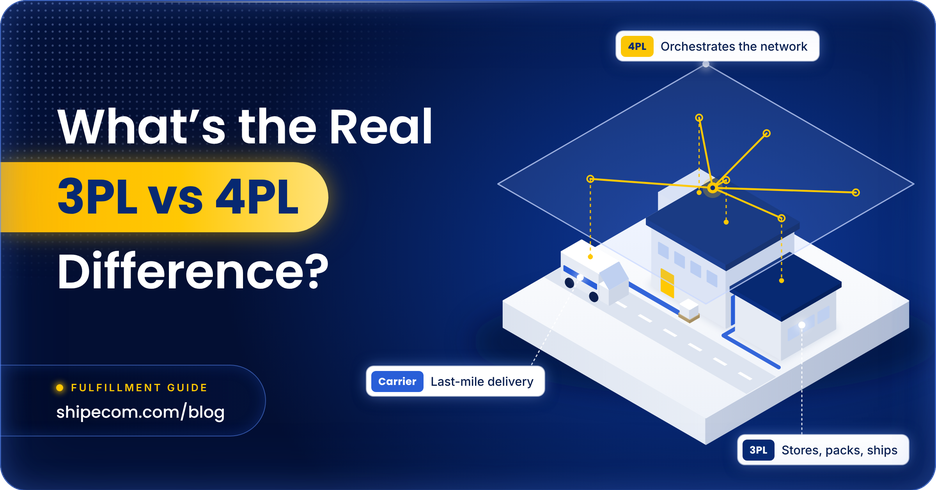
A 3PL with kitting services stores your stock and builds your kits in the same building. A 4PL sits a level above, managing the providers who do that physical work, so a 3PL’s team still assembles the kits either way. Our 3PL vs 4PL guide covers when each model fits.
Choosing a Kitting Partner
Shippers say they’re happy with their logistics partners, though the numbers say little about kitting itself:
- The 2026 Annual 3PL Study, summarized by the University of Tennessee’s Global Supply Chain Institute, found that 88% of shippers call their 3PL relationships successful, and 50% are consolidating the number of partners they use.
- The same study revealed that 55% of shippers describe their 3PL relationships as strategic, while the researchers put the real figure at 5%.
- Inbound Logistics’ 2026 3PL Perspectives report showed 78% of shippers rate service above price when they measure 3PL performance.
No public dataset tracks kit accuracy, so ask each partner for its own figures. Then ask:
- How do you document a BOM, and who signs off the first sample kit?
- How is each kit checked before it ships?
- Can I see components and finished kits as separate stock in real time?
- How long does a new kit take to set up, and how long does a recipe change take?
- Who checks bilingual labelling and origin marking on kits sold in Canada?
How Ecom Builds and Ships Kits
We run kitting inside our ecommerce fulfillment operation, so a kit goes from the build bench to storage, pick and pack, and dispatch without changing hands.
| You control | Ecom handles |
| The BOM, the insert and the packaging spec | Kits and inserts prepared to that specification |
| Sign-off on the first sample kit | Scan checks and packing quality control before dispatch, with a reported 99% order accuracy rate |
| Which channels sell each kit | D2C, B2B retail and Amazon orders drawing from one inventory pool |
| Your launch and promotion calendar | Stock updates across connected channels, with status in the client portal |
“Most kitting errors start before the first kit is built. When the BOM, the insert and the label are signed off on a sample kit, our team can check every build against one standard, and a missing part gets caught at the bench instead of in your customer’s hands.” – Omar Laz, Sr. Director, Fulfillment at Ecom.
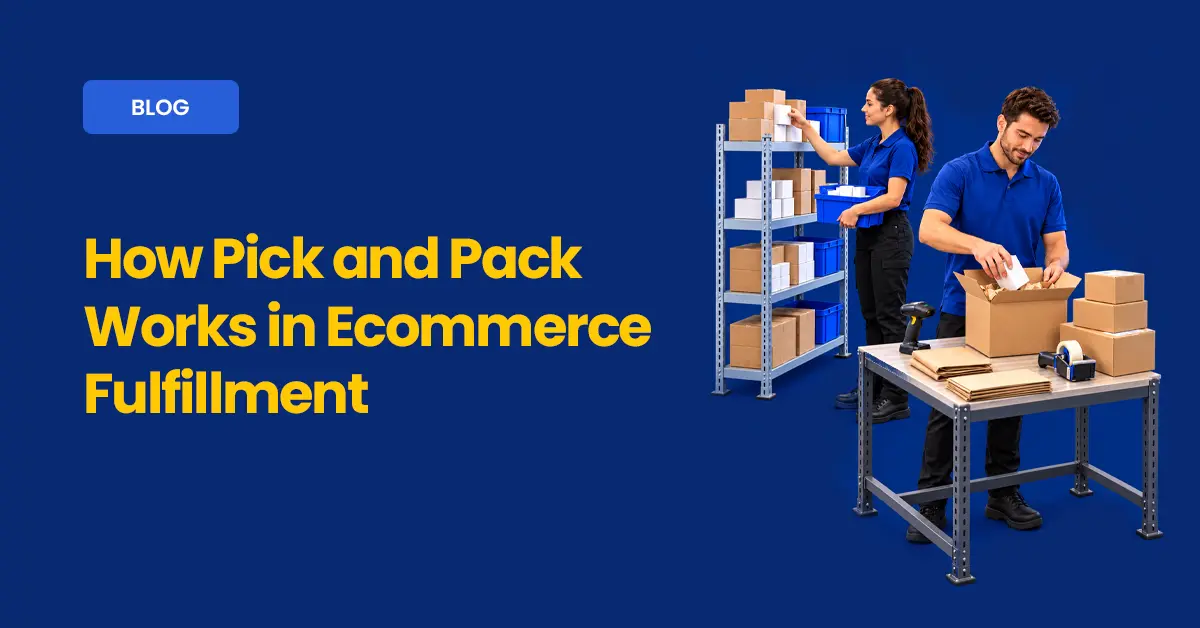
For the scan checks between the shelf and the box, see how pick and pack works.
Get the Build Right Once
The missing trimmer gets fixed before any order lands: a clear BOM, a signed-off sample kit, and labels checked against Canadian rules. After that, the right partner builds the same kit the same way every time, and the box your customer opens is the one you designed.
Frequently Asked Questions
1. What is kitting?
Kitting combines separate products into one finished unit with its own SKU, such as a gift set or a subscription box. The warehouse builds the kit ahead of time and picks it as a single item.
2. Do I need a new barcode for a kit?
In most cases, yes. GS1 says a physical bundle needs its own GTIN, assigned by whoever creates it. A virtual bundle, picked as separate items, keeps the components’ own barcodes.
3. When does pre-kitting cost more than it saves?
When volume is low or hard to predict, when the recipe changes often, or when every order is customized. In each case you pay a build fee for stock that sits, gets rebuilt or gets unpacked again.
4. Should I use a 3PL or a 4PL for kitting?
Most growing brands use a 3PL, because the team holding the stock also builds the kits. A 4PL suits large shippers coordinating several providers.
Sources
- University of Tennessee Global Supply Chain Institute, The 3PL Study Comes Home, summarising the 2026 Annual 3PL Study
- Inbound Logistics, 2026 Inbound Logistics Perspectives 3PL Market Research Report
- Inbound Logistics, 3PL vs 4PL: Their Key Differences and Benefits
- Forum for International Trade Training (TradeReady), Using Third Party Logistics (3PL) to optimize your supply chain management
- Forum for International Trade Training (TradeReady), What is 4PL? 4PL providers and how they can help your business, citing the CSCMP definition
- Competition Bureau Canada, Guide to the Consumer Packaging and Labelling Act and Regulations
- Gouvernement du Québec (LégisQuébec), Regulation respecting the language of commerce and business (C-11, r. 9)
- Canada Border Services Agency, Memorandum D11-3-1: Marking of Imported Goods
- Canada Border Services Agency, Memorandum D10-13-1: Tariff Classification of Goods