Order fulfillment is everything between a customer paying and the order arriving, plus the return if it comes back. Here’s what happens at each of the five stages, how a 3PL runs them, and how to tell whether outsourcing makes sense for your brand.
Your Shopify dashboard says 212 pairs of your best-selling trail runner are in stock. The warehouse count says 198. By the time anyone compares the two, fourteen customers have paid for shoes that aren’t on a shelf, and your support team is drafting apology emails nobody budgeted for.
Nothing broke at checkout. Those fourteen orders went wrong weeks earlier, when a short carton came off a truck and was shelved as full. Order fulfillment is a chain of handoffs, and a mistake at any link travels forward until it lands on a customer.
This blog walks through the order fulfillment process: what order fulfillment is, the five stages, how 3PL fulfillment works for ecommerce brands, how in-house and outsourced setups compare, and where last-mile delivery fits.
What Is Order Fulfillment?
Order fulfillment covers everything from the moment a customer pays to the moment the order arrives, plus the return if it comes back. Shipping is one step inside it. Receiving, storage, picking, packing, and returns make up the rest.
The Five Stages of the Order Fulfillment Process
| Stage | What happens | What goes wrong when it’s rushed |
| 1. Receiving | Inbound freight is checked against the advance ship notice (ASN) and purchase order | Short or damaged stock goes on the shelf as sellable |
| 2. Storage and inventory | Stock is put away to scanned locations and synced to your sales channels | Your store sells units the warehouse can’t find |
| 3. Pick and pack | Orders are picked, scan-checked and packed to spec | The wrong size ships, and the return costs you twice |
| 4. Shipping and last mile | Parcels move to the carrier or route that meets the promise | Late parcels turn into support tickets |
| 5. Returns | Items are inspected, graded, then restocked or written off | Returned stock sits in a corner instead of selling again |
Stage 1: Receiving
This is where the trail runner problem started. Your supplier sends an Advanced Shipping Notice (ASN) before the truck arrives. The team counts cartons against it. They check for damage and scan every SKU. A carton that’s short gets logged at the dock, while someone can still call the supplier.
Stage 2: Storage and Inventory
Full pallets go to reserve racking and single units feed the pick faces, with fast sellers closest to the packing area. Each putaway scan updates the stock count your storefront.
Records drift faster than most brands expect. When Nicole DeHoratius and Ananth Raman audited nearly 370,000 inventory records across 37 stores of one retailer for a study in Management Science, 65% were wrong. Retail stores see more drift than a scanned warehouse, but earlier work by Raman, DeHoratius and Zeynep Ton in California Management Review blamed execution, not software, and that applies anywhere stock sits.
Stage 3: Picking and Packing
Each item is scanned at the bench, then packed, weighed, and labelled. Our guide to how pick and pack works covers the methods.
Retail orders add paperwork. Distribution centres expect cartons and pallets to carry a GS1-128 label with a Serial Shipping Container Code, as GS1 Canada’s barcode guide sets out, and a mislabelled pallet can earn a chargeback even when it arrives on time.
Stage 4: Shipping and Last-Mile Delivery
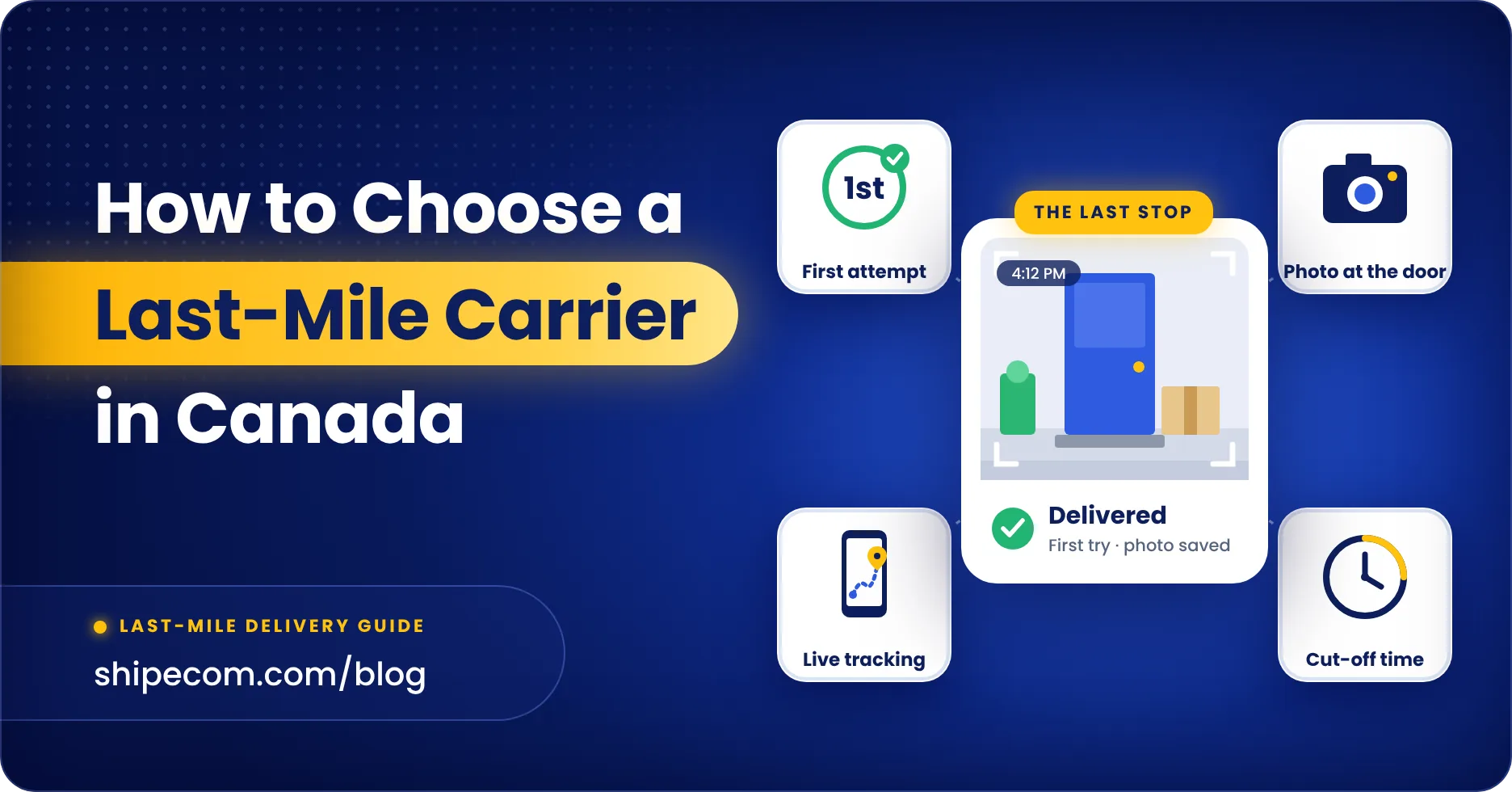
Packed parcels are sorted by destination and service level, then handed to a carrier or a local route. The last mile is the part customers judge you on:
- DHL’s 2025 Canada e-commerce report found 3 in 4 Canadian shoppers won’t buy from an online retailer if they don’t trust its delivery or returns provider.
- Canada Post’s ecommerce research found 40% of Canadian online shoppers have avoided buying again after a brand did a poor job managing delivery timing.
Stage 5: Returns
Returned parcels are opened, graded against your condition rules, and either restocked or written off. Volume makes this a real line item, the National Retail Federation and Happy Returns estimated that 19.3% of US online sales were returned in 2025.
How 3PL Fulfillment Works
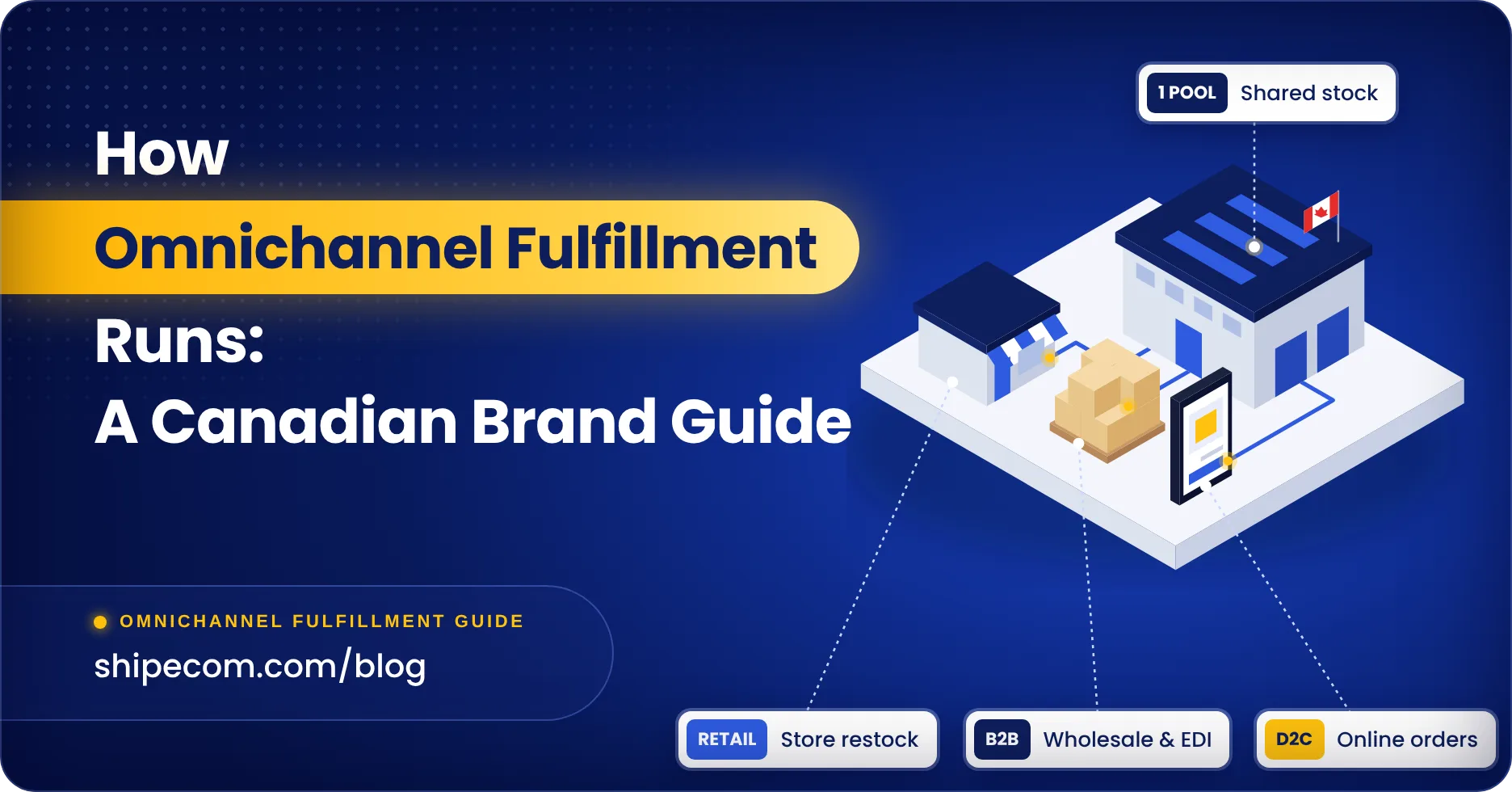
A third-party logistics (3PL) provider runs the warehouse, staff, software and carrier contracts for you. You connect your Shopify store, marketplaces and any retail EDI feeds to its warehouse system, then ship your stock in with an ASN. From there, orders flow to the floor as customers pay, the 3PL picks and ships to the service levels in your agreement, and tracking and stock counts sync back to your store.
In-House vs 3PL Fulfillment
| Factor | In-house | 3PL |
| Upfront cost | Lease, racking, equipment, software | Activity-based fees for receiving, storage, pick and pack, shipping |
| Labour | You hire and staff for peak | The 3PL staffs the floor and absorbs swings |
| Shipping rates | Your volume alone | The 3PL’s pooled volume |
| Reach | One location | Several sites closer to customers |
Shippers that outsource say it pays. In the 2026 Annual Third-Party Logistics Study, as FleetOwner reported, 75% of shippers said their 3PLs help cut overall logistics costs. In-house still suits small volumes and products that need specialist handling.
In Canada, Statistics Canada’s March 2026 retail release put e-commerce at 7.1% of retail trade, so many brands run wholesale and D2C side by side, and a partner that serves both from one stock count saves splitting inventory.
Where Fulfillment Breaks
Two failures show up repeatedly. Retail chargebacks come from a missing ASN, a wrong carton label or a pallet built too tall, and the fix is checking each retailer’s routing guide before the truck is loaded. Returns pile up when nobody owns the intake, so give returns their own station, written grading rules and a target for how fast items get back to sellable stock.
“Most fulfillment problems we fix started at receiving. If the count is wrong when stock comes off the truck, every pick, every stock sync and every customer promise after that inherits the mistake.” Says Omar Laz, Sr. Director, Fulfillment at Ecom.
Questions Worth Asking Any Partner
Before you sign with a 3PL, use these questions to see how it runs each stage:
- How do you receive inbound stock, and how do you report discrepancies? Ask to see the process from ASN to putaway.
- Can D2C, retail and Amazon orders draw from one inventory pool?
- How are orders checked before they ship?
- Who runs the last mile in your main cities? A partner with its own drivers can hold tighter cut-offs and answer for each delivery.
- How do returns get back into sellable stock, and who sets the condition rules?
How Ecom Runs Each Stage
Ecom runs order fulfillment in Canada and the US with freight and last-mile delivery on the same network, and every step writes an event your team and your customer can see.
| Stage | How Ecom handles it |
| Receiving | Inbound checked against your ASN, with quantities and discrepancies recorded on arrival |
| Inventory | Stock reserved against a scanned location, with the count updated in your dashboard |
| Pick and pack | Scanned through the pick, quality-checked against the order, then packed to your packaging and insert rules |
| Delivery | Same-day and next-day on our own vans where we run routes, closed out with a timestamped photo |
| Returns | Inspected and restocked inside the fulfillment operation, using your product-condition rules |
Behind it: 450,000 sq ft of warehouse space, a 99% order accuracy rate and one inventory pool for D2C, B2B retail and Amazon orders.
Click to Doorstep, Without the Gaps
The fourteen missing trail runners came down to one uncounted carton. Get the receipt right, keep the stock count true, check every pick and prove every delivery, and the order fulfillment process stops producing surprises.
If your team spends its days on the dock, our specialists can review your order volumes and show how a 3PL would run them. Click, pick, pack and deliver should feel like one step to your customer.
Frequently Asked Questions
1. What is the order fulfillment process?
It’s the sequence that takes an order from checkout to the customer’s door: receiving stock, storing it, picking and packing the order, shipping it, and handling any return.
2. How is order fulfillment different from shipping?
Shipping is one step inside it. Most shipping problems start earlier, at receiving or in the stock count.
3. How does a 3PL charge for fulfillment?
Most charge by activity: receiving, storage, pick and pack per order and unit, and shipping by weight, size and destination. Returns often carry their own fee, so ask for a quote built on your order profile.
4. When should a brand move to a 3PL?
Watch for peak-season delays, staff packing boxes instead of growing the business, and warehouse costs rising faster than sales. Ecom’s fulfillment programme is built for brands shipping 1,000 or more orders a month.
5. Is outsourcing fulfillment worth it?
For most growing brands, yes: 75% of shippers in the 2026 Annual Third-Party Logistics Study said their 3PLs help reduce overall logistics costs. Your volume and products still decide it.