
What a fulfillment quote is made of
A fulfillment price depends on the work behind each order. Receiving format, SKU count, stock turnover and customer destinations all affect the total. Use these cost categories to compare quotes against the same order profile.
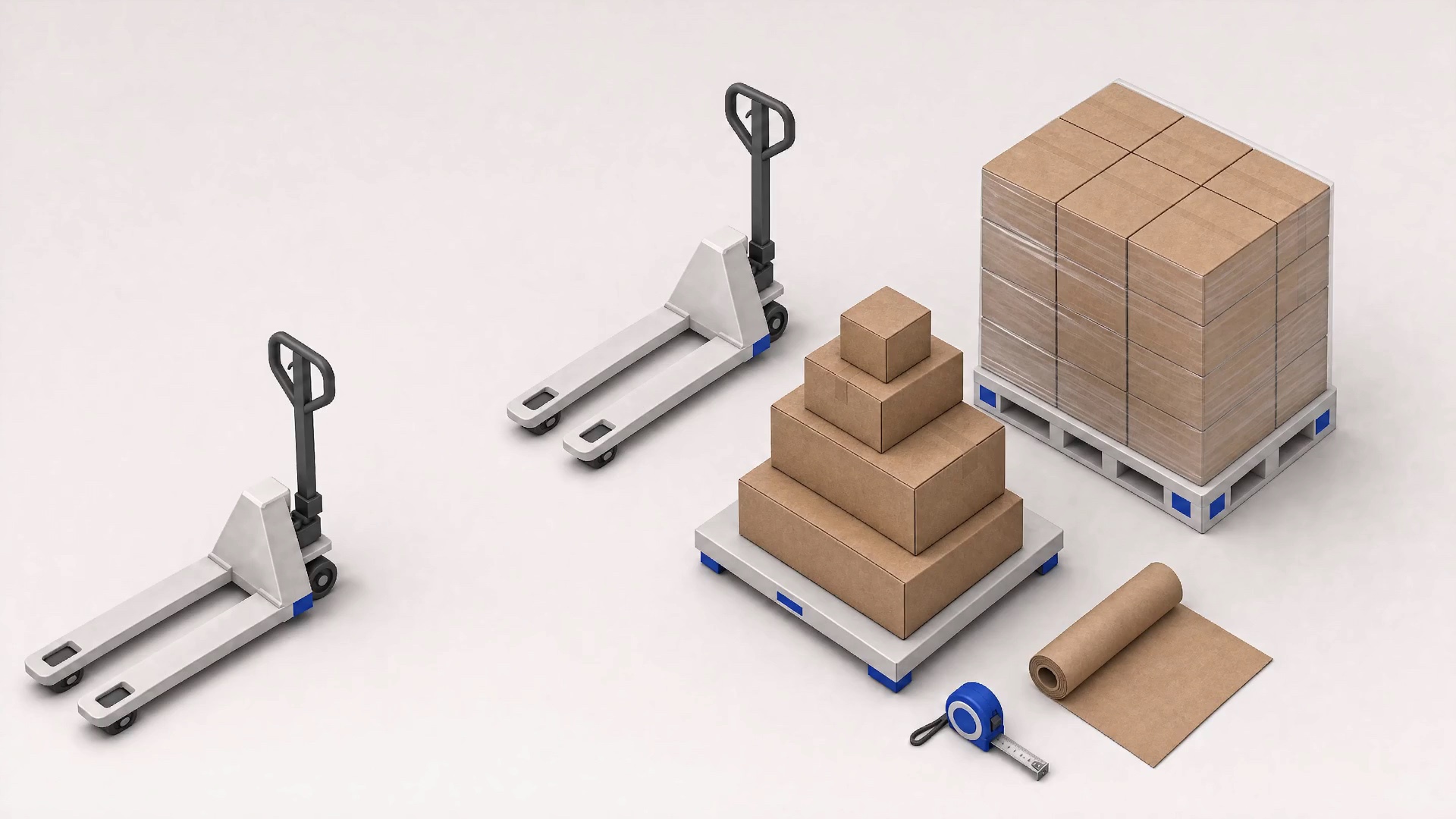
Six lines, and what moves each one
Every fulfillment quote you receive, from us or anyone else, is some arrangement of these. If one is missing from a competitor quote, it is worth asking where it went.
- Receiving
- Charged on the inbound, by pallet or by carton. How your stock arrives is what moves it. A floor-loaded container takes hours that a palletised trailer does not, and mixed cartons take longer than single-SKU.
- Storage
- Charged on the space your stock occupies over time, by pallet position or shelf. Driven by turn rate more than volume: fast-moving stock uses fewer positions for the same throughput.
- Pick and pack
- Pick and pack pricing depends on the order profile, including lines per order and handling requirements. Ask how the first pick, additional units and any special work appear in the quote.
- Packaging
- The packaging line covers the materials your orders need, including branded packaging if supplied. Confirm who supplies each material and how its cost is quoted.
- Shipping
- The carrier or our own last-mile network, by service level, weight and destination. Driven by your destination mix more than anything else on this list.
- Returns
- Returns involve receiving, inspection and a decision on restocking or another disposition. Compare the quoted work with your expected return volume and product-condition rules.




Why two brands shipping the same volume pay differently
| What moves the price | Brand A | Brand B |
|---|---|---|
| Lines per order A one-item order is picked once. A six-item order is picked six times and takes a bigger box. This moves cost per order more than volume does. | One item per order | Six items per order |
| SKU count against volume Four hundred SKUs shipping the same units as forty needs more storage positions and more pick faces for the same revenue. | Forty SKUs | Four hundred SKUs, the same units |
| Turn rate Slow-moving inventory occupies space across billing periods. Review stock age and replenishment quantities to understand the storage cost your order margin has to carry. | Stock that moves every period | Stock that sits |
| Destination mix Where your customers are decides the shipping line, and shipping is normally the biggest single component of the total. | Customers mostly in one metro | Customers across both countries |
What we will not do
- No charge appears on an invoice that was not on the quote.
- No long-term lock-in required to get a working rate.
- If your profile means we are the wrong fit, we will say so on the first call rather than quote you badly.
What brands ask about cost
Why will you not publish a rate?
What do you need in order to quote?
Is there a minimum volume?
Are there setup or onboarding fees?
How does delivery pricing work?
What happens next
What happens after I submit this?
It routes to the team that runs the service you selected, fulfillment and freight to our business inbox, delivery services to the delivery inbox, rather than to an individual salesperson. Whoever picks it up has your shipment details in front of them before they call.
How long until someone comes back to me?
A specialist reviews requests during business hours. Include your planned launch date or any urgent shipping requirements so we can discuss the timing with you.
What do you need from me to price this?
The shipment details on this form are enough for a first conversation: monthly order volume, how many SKUs, units per order, pallet movement, and where it ships from and to. For a firm quote we will usually also want a product list with dimensions and weights, and a sample of recent order data.
Can I talk to someone before filling this in?
Yes. Use the short call-request form to tell us what you would like to discuss. A specialist will contact you to confirm a time; you do not need a complete shipment profile to start.
I already ship with you and need help with an order.
This form is for new pricing. For an existing shipment, track it or use the support pages: that reaches the operations team directly, which is faster than a sales route.
Send us your volumes.
Lines per order, SKU count, turn rate and destination mix. The quote comes back priced against them, not against a list rate.