Omnichannel fulfillment means every sales channel draws from one stock count instead of its own stockroom. Here’s how it routes orders, where buy online, pick up in store fits, what Canada’s geography changes, and what to ask a partner before you combine your channels.
At 1:40 p.m. on a Tuesday, a shopper in Burnaby orders a winter jacket from your Shopify store. Your checkout says it ships from Ontario and arrives in five to seven business days. She opens a competitor’s site, sees pickup today at a store ten minutes away, and closes your tab. Your Vancouver stockroom had six of those jackets the whole time, held for a wholesale order that ships next month.
The stock was nearby, but because it sat in a stockroom allocated to wholesale, nothing in your setup could tell checkout that two of those six jackets were free to sell, which is the gap an omnichannel approach is built to close.
This guide shows Canadian brands how to connect isolated stockrooms into an omnichannel fulfillment network. It covers how omnichannel inventory management keeps counts accurate, how omnichannel order fulfillment routes each order, where buy online pick up in store (BOPIS) fits, and how to build an omnichannel fulfillment strategy around Canada’s geography.
What Is Omnichannel Fulfillment?
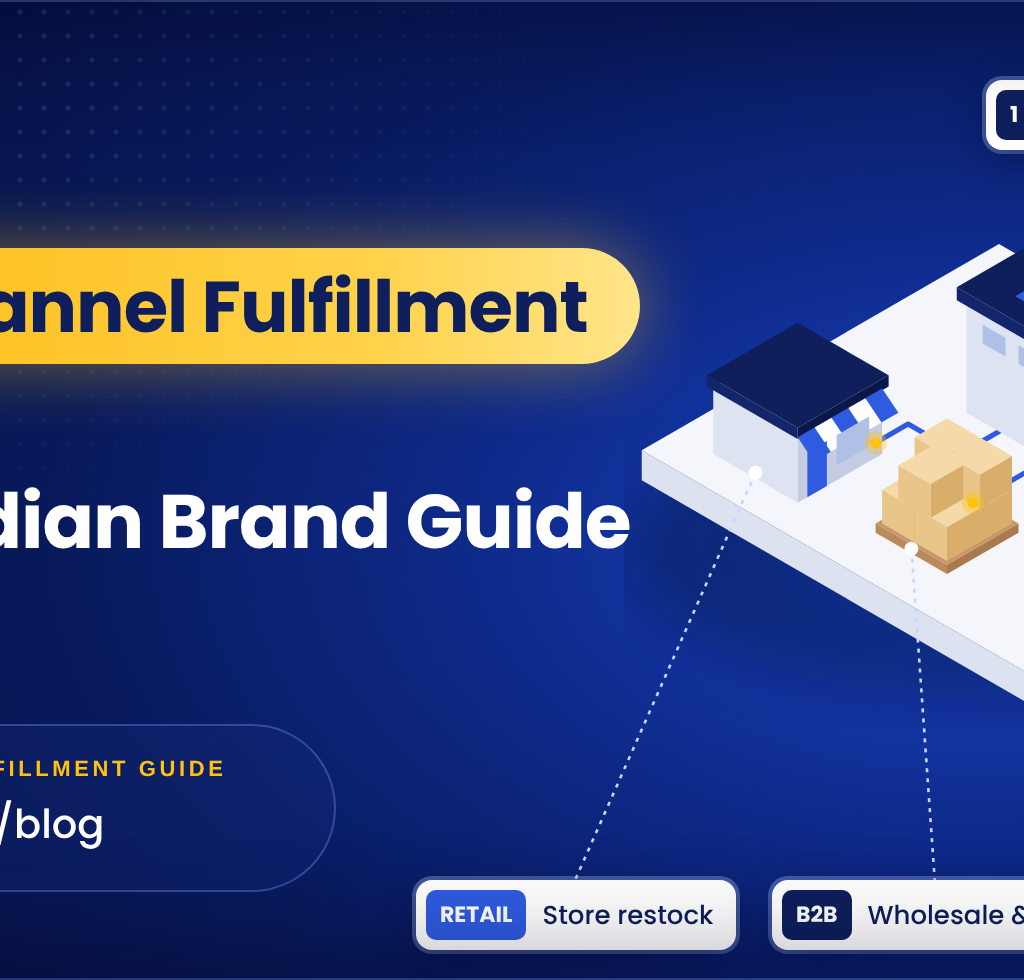
Omnichannel fulfillment is an order fulfillment model in which every place you hold stock (warehouses, retail stores, regional hubs) works as one shared inventory pool. An order from any channel, whether that’s your Shopify store, a retailer’s purchase order or a marketplace, can be filled from any location that has the item, including through ship from store or in-store pickup.
The software behind it is omnichannel order management, also called distributed order management. It sees stock at every location, picks where each order ships from, and keeps your available-to-promise count accurate, so a customer never buys a unit that’s already promised another channel.
How Omnichannel Order Fulfillment Routes an Order
Go back to the Burnaby jacket. In an omnichannel setup, the Shopify order lands in your order management system (OMS) alongside store sales, marketplace orders, and the retailer’s purchase order. The system sees six jackets in Vancouver, four of them committed to wholesale, and checks whether the other two can go to web customers without shorting that PO.
They can, so Vancouver gets the order. The OMS weighs postal code, carrier rates and each site cut-off before it decides, and it reserves the unit now. Every channel sees five jackets from that point on, which keeps your available-to-promise number honest.
Omnichannel vs Multichannel Fulfillment: Where Split Stock Costs You
Plenty of brands sell on Shopify, on Amazon and through retail buyers while running three separate stockrooms, each with its own allocation and safety stock. One channel sells out. Another sits on spare units, and you pay to hold both.
| Operational area | Multichannel (split stock) | Omnichannel (one pool) |
| Inventory view | Separate counts per channel, with manual transfers | One count across fulfillment centres, stores and hubs |
| Order routing | Fixed by channel | Sent to the closest location that can meet the promise |
| Safety stock | A buffer for every channel | One buffer that serves all demand |
| Delivery options | Standard parcel from one warehouse | Store pickup, same-day and next-day where stock sits close |
What the Research Says About Delivery Choice
Shoppers decide on delivery before they pay, and split stock limits what you can show them at checkout.
- Baymard Institute’s cart abandonment research shows 40% of US shoppers who abandoned a checkout left over extra costs, shipping included, and 20% left because delivery was too slow.
- DHL’s 2025 Canada e-commerce report found 82% of Canadian shoppers will abandon a basket if their preferred delivery option isn’t offered.
- Canada Post’s ecommerce research found 6 in 10 Canadian online shoppers expect orders fulfilled within two days.
Baymard also recommends showing delivery dates at the start of checkout. That helps when the date is short, and a short date needs stock near the shopper.
Where BOPIS Fits
Buy online pick up in store (BOPIS) gives shoppers a free, same-day option whenever a nearby store holds the item. Capital One Shopping’s 2026 BOPIS roundup reports 48% of US BOPIS shoppers use it to avoid shipping fees, and eMarketer forecasts that 66.4% of US click-and-collect buyers will pick up in store by 2026.
Why Omnichannel Fulfillment in Canada Needs Its Own Plan
Statistics Canada’s 2016 Census release found 66% of Canadians live within 100 kilometres of the southern border, on about 4% of the country’s land. Those customers cluster in a few metro areas thousands of kilometres apart, from Metro Vancouver through Calgary and Edmonton to the Windsor to Quebec City corridor.
So, a single Ontario warehouse sits a long way from your western customers. Stage your fast movers near Toronto, Montreal and Vancouver and keep bulky, slow SKUs central.
However, Quebec brings its own requirements. The final Bill 96 provisions on French product packaging came into force on June 1, 2025, as Gowling WLG explains, and your fulfillment partner needs to know which SKUs carry Quebec-ready packaging.
Practical Challenges in Omnichannel Fulfillment
Phantom inventory on store shelves. A walk-in shopper can take the last unit while an online order claims it. Set a store buffer in your OMS that hides an item online once the shelf count drops below two or three units.
Floor staff overload. Packing online orders during a lunch rush slows both jobs, so schedule pick and pack before the doors open.
Retail orders draining web stock. A large retail PO can empty the shelf your webstore depends on, which is what happened to the Burnaby jacket. Agree allocation rules up front, so you know in advance how many units each channel can claim.
Returns across locations. When returns land in stores, warehouses and regional hubs, they drop out of your counts unless every site follows the same inspection and restock steps. The volume makes this worth getting right, the National Retail Federation and Happy Returns estimate 19.3% of US online sales were returned in 2025.
“Brands come to us with three sets of stock numbers that don’t match. Once retail POs, Shopify orders and Amazon prep run off one count, the argument over who gets the last carton becomes an allocation rule you set once and stop revisiting,” – Omar Laz, Sr. Director, Fulfillment at Ecom.
Questions Worth Asking Any Partner
Four questions separate a true omnichannel partner from a warehouse with several logins:
- Can D2C, retail POs and Amazon orders draw from one inventory pool? Many setups still split racking and software by channel.
- Who drives the last mile in your main cities? A partner with its own drivers can hold tighter cut-offs, and there’s one company to call when a parcel goes missing.
- How do you handle retailer routing guides? Wrong carton labels and bad pallet builds trigger chargebacks even when the truck arrives on time. GS1 Canada’s labelling guide shows what most retail distribution centres expect.
- Can you move stock between Canadian and US sites? Cross-border replenishment decides how fast you can rebalance.
How Ecom Answers Those Questions
Ecom runs fulfillment, freight and last-mile delivery on one network, with one operations team in Canada and the US. Our 3PL fulfillment serves D2C, B2B retail and Amazon orders from one pool of stock.
| The research shows | How Ecom responds |
| 20% of US shoppers who abandon checkout cite slow delivery (Baymard Institute) | Same-day and next-day delivery on our own vans where we run routes, plus Ecom Now: order eligible Shopify products before noon, delivered by 9 PM |
| 82% of Canadian shoppers abandon a basket without their preferred delivery option (DHL) | Same-day, next-day and 2–7 day standard delivery, with transit confirmed per lane before you promise it at checkout |
| Split stock ties up cash in duplicate buffers | One inventory pool for D2C, retail and Amazon, with allocation rules agreed for retail commitments |
| Retail mistakes trigger chargebacks | B2B and retail fulfillment with EDI purchase orders, ASNs raised from the scan record and routing-guide checks before loading |
Behind these things sit 23M+ packages delivered, 500+ vehicles, 65% of Canadian households within reach and 98.3% on-time delivery performance.
Every completed delivery carries a timestamped photo on the order record, and returns are inspected, graded and put back into sellable stock with counts synced to your store.
One Count, Every Channel
Omnichannel fulfillment starts with one accurate stock count. Route each order to the nearest location that can keep the promise, then add pickup or same-day delivery where your customers cluster.
If you run separate stockrooms for web, retail and Amazon today, our team can review your order data and show where a single pool changes your delivery promise in each province you sell to. Start with the SKUs that sell in more than one channel; that’s where split stock costs the most.
Frequently Asked Questions
1. What is omnichannel fulfillment?
Omnichannel fulfillment runs your webstore, retail accounts, marketplaces and stores off one shared inventory count, and ships each order from the location that can meet the delivery promise at the lowest cost.
2. What is the difference between omnichannel and multichannel fulfillment?
Multichannel means selling in several places, with each channel keeping its own stock. Omnichannel pools that stock, so a unit held in one location can fill an order from any channel. In practice the difference shows up as lower safety stock and faster delivery to more customers.
3. Does BOPIS make sense for Canadian brands?
It can, if you have stores near your customers and staff time to stage orders. The strongest data is American, Capital One Shopping reports 48% of US BOPIS shoppers use it to avoid shipping fees. Start with one city and measure pickup volume before rolling it out.
4. Why does Canada need a different omnichannel plan?
Distance. Two-thirds of Canadians live within 100 kilometres of the US border, according to Statistics Canada, but in clusters thousands of kilometres apart.
5. Can one partner handle D2C, retail and Amazon orders across Canada and the US?
Yes, if it runs one inventory pool and supports EDI, routing guides and Amazon prep alongside parcel orders. Ecom does this from fulfillment centres in Canada and the US, with its own last-mile fleet in the markets where it runs routes.